Sitewide AI Readiness

AI / GEO Site Audit

Crawl multiple pages and score crawlability, entity clarity, structured data, citation readiness, content structure, trust signals, internal discovery, and AI crawler access in one report.

Only the public URL you submit is fetched by the WebTrendSEO WordPress server. Crawl limits and private-network protections are enforced.

A free, limited crawl that turns on-page GEO signals into a reviewable action list.

FREE AI / GEO SITE AUDIT

Review AI Search Readiness Across Key Pages

WebTrendSEO’s AI / GEO Site Audit reviews multiple public pages for signals relevant to generative engine optimization. Enter your website URL, choose a crawl limit, and add optional brand, topic, and location context.

The report brings together crawl and indexability checks, entity clarity, structured data, content structure, citation readiness, trust indicators, and internal discovery. Page-level scores and recurring issues help you decide where a closer review is needed.

Scores are rule-based indicators for the pages scanned. They do not measure live mentions in AI answers or guarantee rankings and citations. Use the findings alongside a broader professional SEO audit when you need deeper investigation.

Page-Level GEO Scores

Entity and Brand Signals

Structured Data Checks

Content Structure

Authorship and Date Signals

Citation Readiness Indicators

Crawl and Indexability

Internal Discovery

AI Crawler Access
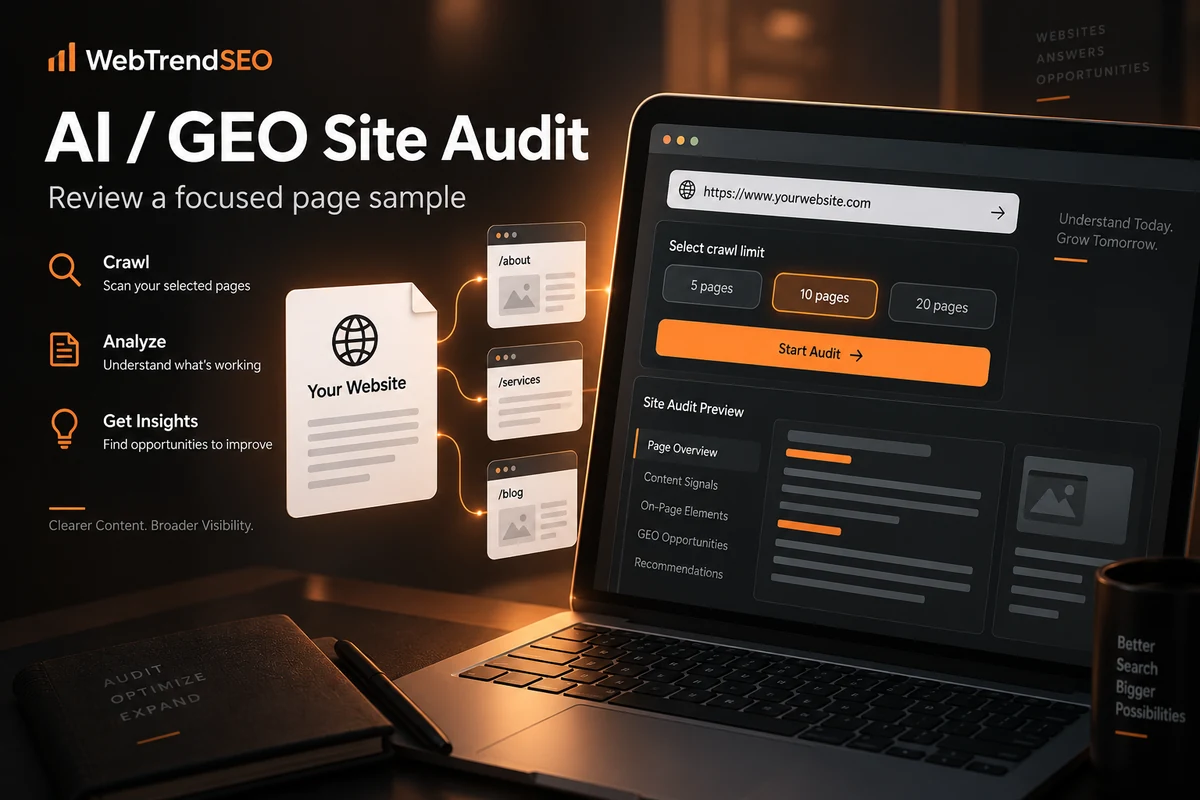
AI GEO Site Audit mockup with a website URL field and crawl limits of 5, 10, or 20 pages.
How It Works

How to Run an AI / GEO Site Audit

Start with a small crawl, review the pages actually scanned, and expand the limit if needed. Add accurate business context to make the entity and topic checks more useful.

Enter a public website URL
Choose a 5, 10, or 20-page crawl limit
Add brand, topic, and location context
Keep robots.txt respect enabled
Run the audit and review page findings
Export and prioritize relevant fixes
WHY USE OUR AI / GEO SITE AUDIT?

Find Patterns Across Your Crawled Pages

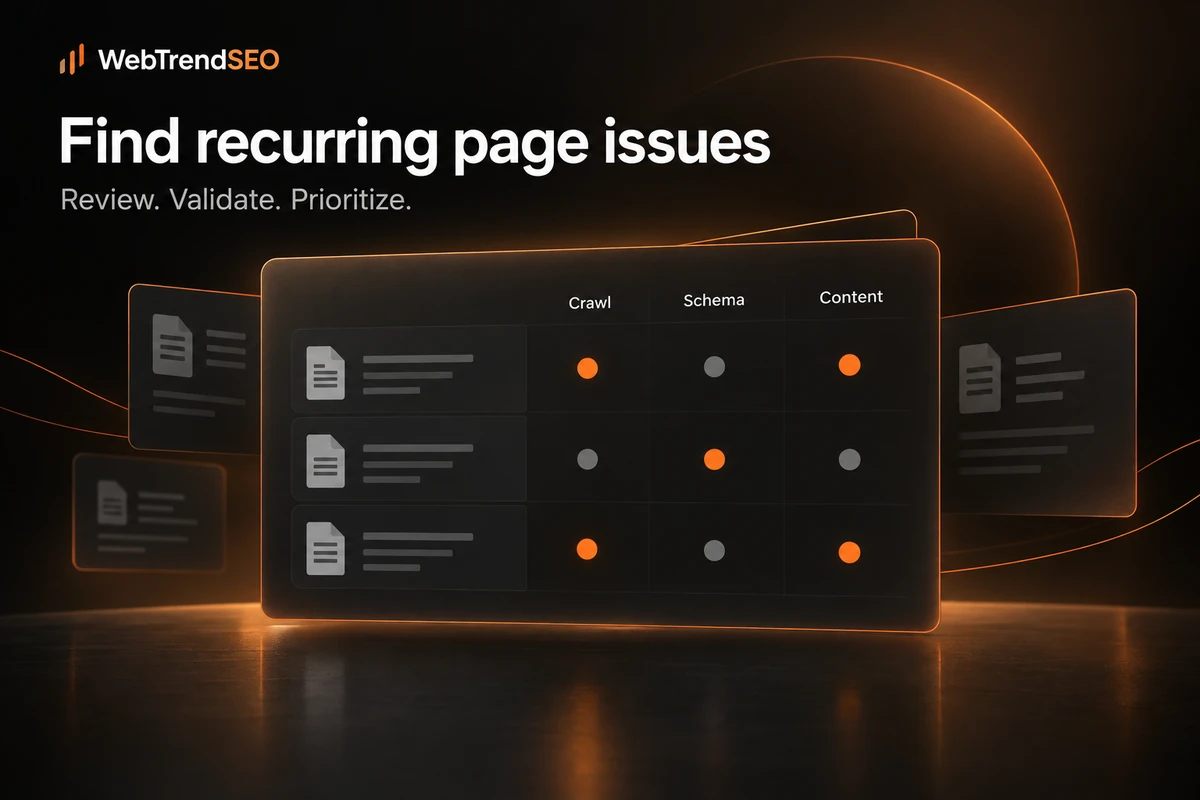
A missing date, unclear brand reference, or repeated structured-data issue can affect several pages that share a template. Reviewing a page sample together helps you spot those patterns and avoid treating every finding as a separate problem.

The audit groups findings by category and highlights how many crawled pages are affected. Use this evidence to prioritize technical SEO improvements and on-page content work that fit each page’s purpose.

Review suggestions before making changes. Add authorship, dates, facts, or schema only when they accurately represent the page; a higher tool score is not a substitute for useful content.

Illustrated audit matrix comparing crawl, schema, and content findings across a page sample.

Review multiple pages together

Spot recurring template issues

Compare readiness categories

Choose your crawl limit

Export an actionable report

No paid API required

START WITH A FOCUSED CRAWL

Build Your GEO Audit Action List

Run a focused crawl of your public website and review the affected pages. Export the report, confirm each issue, and turn relevant findings into a practical checklist for your team.

Page audit checklist for SEO teams, content teams, and developers planning website improvements.
Use Cases

Who Can Use This Tool?

This audit helps SEO teams, agencies, developers, publishers, and business owners review technical and content signals across a limited sample of public pages.

SEO consultants reviewing GEO readiness
Agencies auditing client page samples
Business owners checking brand clarity
Publishers reviewing dates and authorship
Local teams checking service-page context
Content teams reviewing answer structure
Developers investigating template issues
Safe & Secure

Audit Public Pages Without Sharing Credentials

The audit fetches public pages through the WebTrendSEO WordPress server. You do not need to provide a WordPress password, AI account login, or paid API key.

Use public URLs without private tokens or credentials. Leave robots.txt respect enabled for a public audit. Crawl limits and private-network protections are enforced; the tool is not intended for private dashboards or restricted internal systems.

Free Tools

Other Free Tools From WebTrendSEO

AI Citation Readiness Checker

Review content signals that support clear, sourceable answers.

Entity SEO Checker

Review brand details, entity signals, and structured data consistency.

AI Visibility Checker

Compare brand mentions in supplied AI answer samples.

AI Citation Source Analyzer

Analyze cited sources and domains in supplied AI answers.

AI Brand Accuracy Checker

Compare AI claims about a brand against verified facts.

LLMs.txt Generator

Generate an llms.txt file from your site information.

Practical Site Audits by WebTrendSEO

FAQs

AI / GEO Site Audit FAQs

Learn what the audit crawls, how to interpret GEO scores, and where a limited page sample needs further investigation.

It is a multi-page check of technical and content signals relevant to generative engine optimization. WebTrendSEO’s tool crawls a limited sample of public pages and reports readiness indicators for crawlability, entities, structured data, citation-friendly content, trust, and internal discovery.

Choose a maximum of 5, 10, or 20 pages. Enter a public starting URL and optionally add your brand, primary topic or service, and target location. The audit uses fetched page content and access signals, with the context you provide.

The report shows how many pages were actually scanned. A crawl can find fewer pages than the limit, so check its URL table before treating the sample as representative of your website.

No. The score summarizes rule-based checks of the crawled pages. It does not query ChatGPT, Gemini, Perplexity, or Google AI Overviews to verify mentions or citations.

Use scores to identify items for review, not as a ranking prediction or a guarantee of AI visibility. Actual AI answer testing is a separate research task.

The report includes crawl and indexability, AI crawler access, entity and schema signals, content structure, trust indicators, and citation-friendly facts, sources, authorship, and dates. It highlights recurring issues and provides page-level category scores.

Confirm each finding on the affected page. Fix relevant technical barriers and improve clarity where useful. If you need to prepare structured data, use the Schema Markup Generator and validate the result before implementation.

SEO teams, agencies, developers, publishers, and business owners can use the audit as an initial review. Its coverage is limited to accessible pages within the selected crawl limit. Restricted pages, blocked requests, and content unavailable to the crawler can limit findings.

The tool does not prove indexing, source credibility, or content expertise. It does not edit your pages, install schema, change robots.txt, or fix issues automatically. For deeper diagnosis, consider a professional SEO audit.

Yes. No paid AI API, data subscription, or tool signup is required. After a completed audit, you can copy the output, download a file or CSV, or print the report and save it as a PDF.

Keep the crawl date, settings, and scanned URLs with your report. Run another audit after relevant changes to compare findings in context.

Lets Talk

Turn Audit Findings Into Practical SEO Improvements

Your report is a starting point for reviewing technical barriers, page clarity, and structured data. WebTrendSEO can help validate the findings, prioritize relevant work, and build a coordinated SEO improvement plan for your website.