Technical SEO

Redirect Checker

Follow redirect chains safely and report every hop, loop, final URL, and final HTTP status for up to 25 URLs.

Public URLs are fetched securely with strict crawl and rate limits. Reports are not saved to your WordPress database.
Follow each redirect and check where the request ends.

Redirect Checker

See where your redirected URLs actually lead

A redirected URL may pass through several destinations before it reaches a page. WebTrendSEO’s Redirect Checker follows that route and reports the initial status, redirect hops, final URL, and final HTTP response.

Paste up to 25 public URLs to spot unexpected chains or loops. Use the report to review your redirect rules, then check whether the final page is the right destination for the original link.

Initial HTTP status

Every redirect hop

Final destination

Final response code

Redirect loops

Unsafe target notes

Up to 25 URLs

Per-URL results

Public URL checks
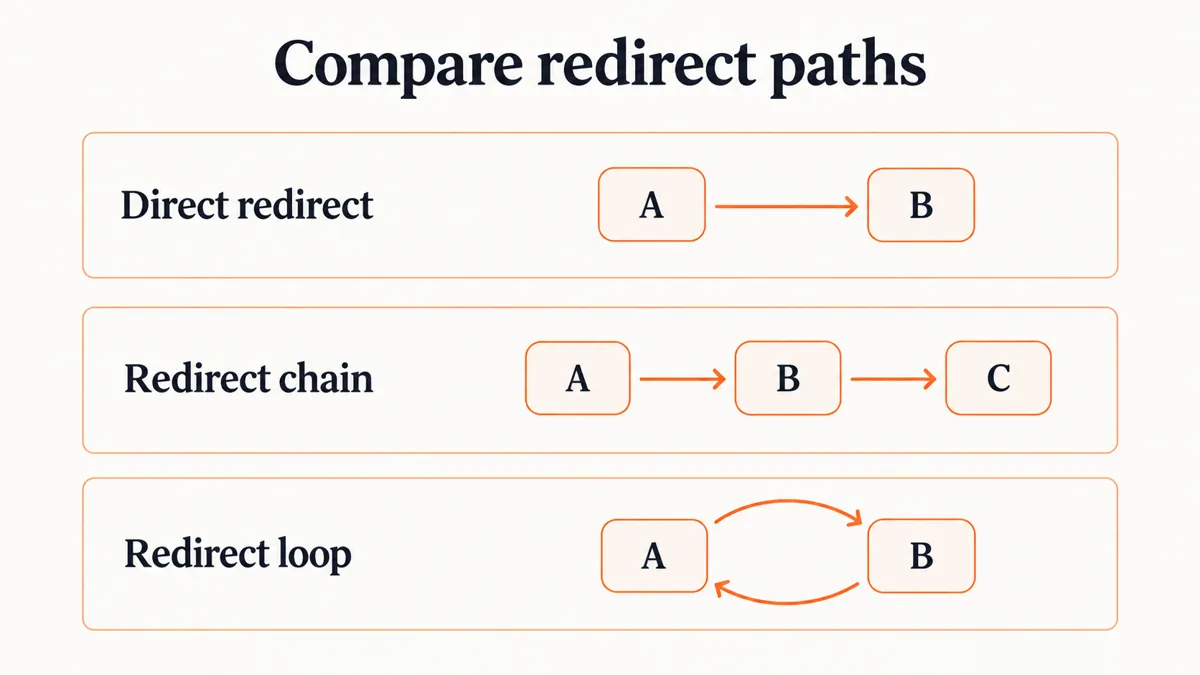
Examples of a direct redirect, a redirect chain, and a redirect loop
How It Works

How to use the Redirect Checker

Enter a short list of public URLs, one per line. The checker follows their redirects and builds a report for each address.

Paste public URLs, one per line
Keep the list to 25 URLs or fewer
Click Check Redirects
Read each redirect hop
Confirm the final URL and status
Review your rules, then retest
WHY CHECK REDIRECTS?

Review the whole route, not just the final page

A redirect can send visitors to the correct page while still taking an unnecessary route. Checking each hop helps you see intermediary URLs, conflicting rules, and loops that a normal browser visit can hide.

The report describes the requests it observes. It cannot decide whether a destination matches the visitor’s intent, and it does not edit redirect rules. Review important results alongside your site configuration.

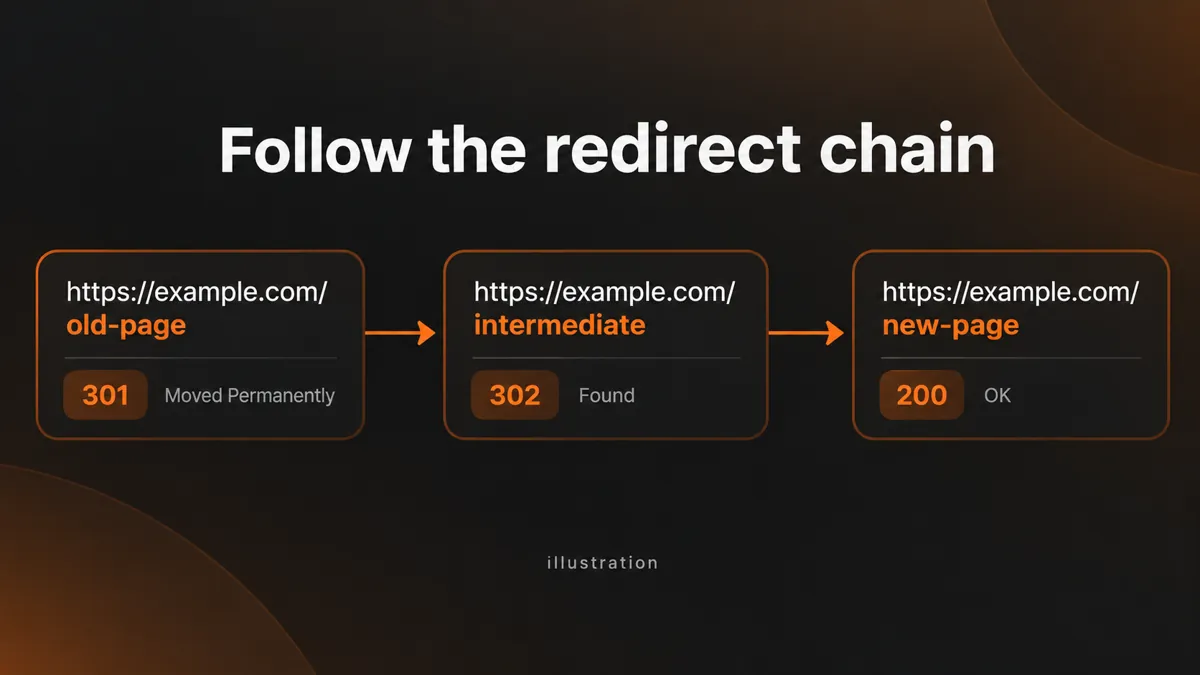
Example redirect chain from a 301 response through a 302 response to a final 200 page

Spot unnecessary chains

Find looping redirects

Review migration destinations

Check old campaign links

Understand final responses

Plan targeted redirect fixes

CHECK YOUR REDIRECT RULES

Verify redirects after a site change

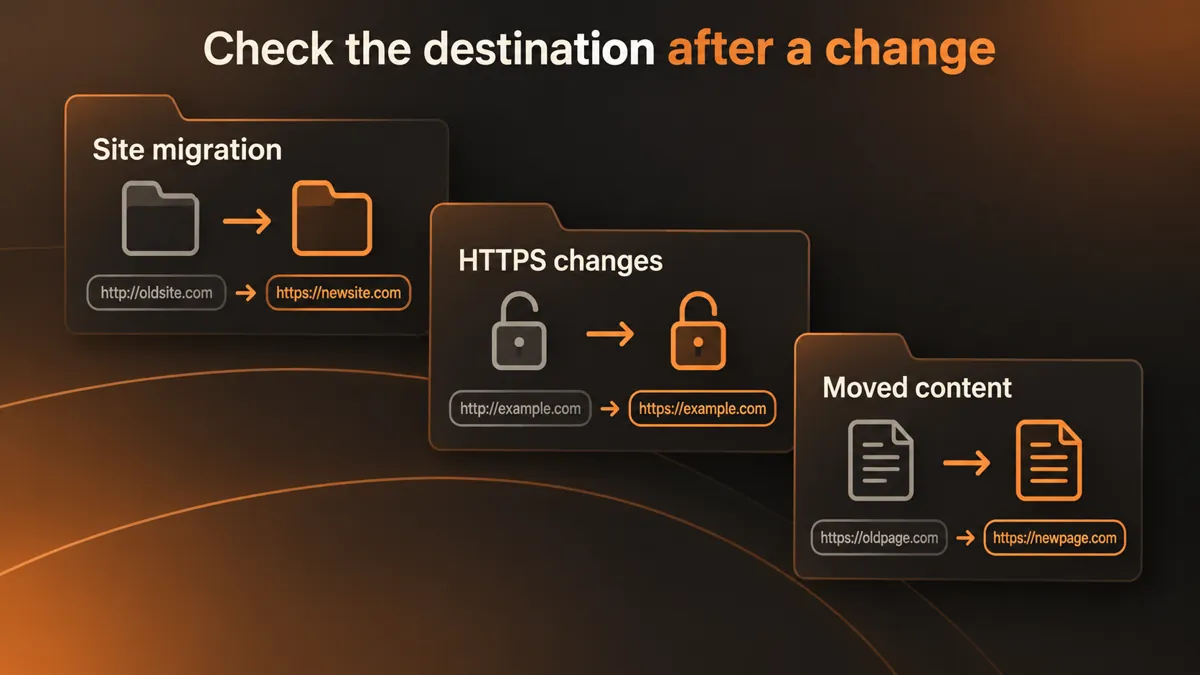
After moving pages, changing domains, or updating HTTPS rules, test the original URLs. Confirm that they reach the intended destination without an unexpected chain or error.
Redirect checks for site migrations, HTTPS changes, and moved content
Use Cases

Who Can Use This Tool?

Use this tool when planning a migration, reviewing redirect rules, or investigating a URL that reaches the wrong page.
SEO teams reviewing site migrations
Developers checking redirect rules
Agencies auditing client URL changes
Editors checking moved articles
Marketing teams testing campaign links
Site owners moving to HTTPS
Support teams investigating wrong destinations
Safe & Secure

How redirect checks process your URLs

Public URLs are fetched server-side with strict crawl and rate limits. The tool states that reports are not saved to the WordPress database.

Use public page addresses and keep private links or access tokens out of your inputs. Unsafe redirect targets may be blocked rather than followed.

Free Tools

Other Free Tools From WebTrendSEO

HTTP Status Code Checker

Check HTTP response codes and review final URL destinations.

Internal Link & Orphan Page Checker

Compare link and URL inventories to find orphan-page candidates.

Sitemap Health Checker

Review XML sitemaps for errors and duplicate URLs.

Broken Link Checker

Check a public page for broken link destinations.

Indexability Checker

Check robots directives, canonical signals, and indexing restrictions.

XML Sitemap Generator

Generate an XML sitemap from a supplied URL list.

Clear reports for practical redirect reviews

FAQs

Redirect Checker FAQs

Answers to common questions about redirect chains, status codes, loops, and the limits of this checker.

It follows redirects for up to 25 public URLs and reports the initial response, each hop, loops, final destination, and final HTTP status.

Paste the original URL, not just its destination, and click Check Redirects. Review each reported hop to see how the request reaches the final page.

A loop occurs when redirect rules send a request back to a URL it already visited. The checker reports loops so you can investigate the conflicting rules.

No. It reports the route it observes. You must review and change redirect rules in your website or server configuration, then test them again.

This checker accepts a list of up to 25 URLs. It is intended for focused checks and does not discover all pages across a website.

The public tool is free to use. It fetches the public URLs you enter server-side with conservative limits and states that reports are not saved to the WordPress database.

Lets Talk

Need help with website redirects?

WebTrendSEO can help review redirect rules, investigate conflicting destinations, and plan a migration that preserves useful page paths.