Scalable SEO Quality Control

Programmatic SEO Risk Checker

Audit large URL inventories for repeated templates, duplicate metadata, thin content, parameter sprawl, and canonical risk.

Uploaded files and GSC tokens are not saved in the WordPress database. Validate business value before irreversible SEO changes.
Analyze up to 5,000 inventory rows in the browser and turn repeated page patterns into a focused quality-control checklist.

Programmatic SEO Risk Checker

Audit URL Patterns Before They Become Sitewide Problems

WebTrendSEO’s Programmatic SEO Risk Checker analyzes the URL inventory you provide and groups repeated page patterns for review.

Upload a CSV with fields such as URL, Title, H1, Meta Description, Word Count, and Canonical, or paste URLs or CSV data directly. Set a thin-page threshold and choose a maximum inventory size of 500, 2,000, or 5,000 rows.

The tool does not crawl your website or judge page quality in isolation. It uses the supplied inventory to surface duplicate metadata rates, thin-page patterns, URL parameters, canonical concerns, and higher-risk templates that deserve manual validation.

Inferred URL Templates

Duplicate Title Patterns

Duplicate H1 Patterns

Duplicate Meta Descriptions

Thin-Page Groups

URL Parameter Sprawl

Canonical Mismatches

Template Risk Scores

Prioritized Review Areas
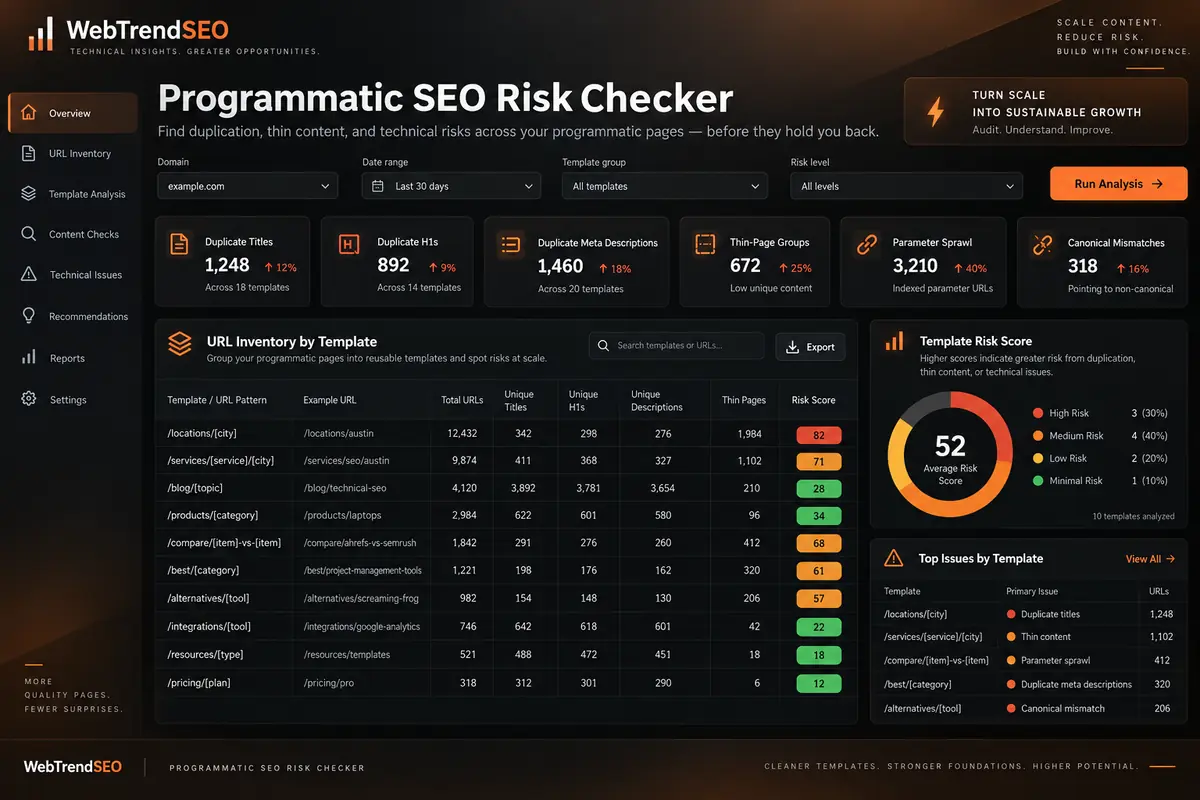
Programmatic SEO dashboard grouping URL templates and reporting duplicate metadata, thin pages, parameter sprawl, and canonical mismatches
HOW IT WORKS

How to Use the Programmatic SEO Risk Checker

Prepare a consistent inventory, choose the analysis thresholds, and validate flagged patterns against representative pages.
Prepare a URL Inventory

Export URLs with titles, H1s, meta descriptions, word counts, and canonicals where available.

Upload or Paste the Data

Choose a CSV file or paste URLs or CSV rows directly into the tool.

Set the Thin-Page Threshold

Choose the word-count level the report should use as a review signal.

Choose the Maximum URLs

Analyze up to 500, 2,000, or 5,000 inventory rows.

Analyze Programmatic Risk

Generate template groups, duplication rates, and risk indicators from the supplied data.

Validate Representative Pages

Open samples from each flagged template before changing, consolidating, or removing pages.

WHY USE OUR PROGRAMMATIC SEO RISK CHECKER?

Find Repeated Quality Risks Across Large URL Sets

Programmatic sites can create hundreds or thousands of pages from a small number of templates. A weak title rule, sparse content block, uncontrolled parameter, or incorrect canonical pattern can therefore affect an entire page group.

This checker helps you review patterns at the template level instead of inspecting every URL one by one. Use the risk scores to choose representative samples, confirm the issue on live pages, and prioritize changes with the greatest reach.

For crawl, indexation, rendering, and large-site support, explore WebTrendSEO’s technical SEO services.
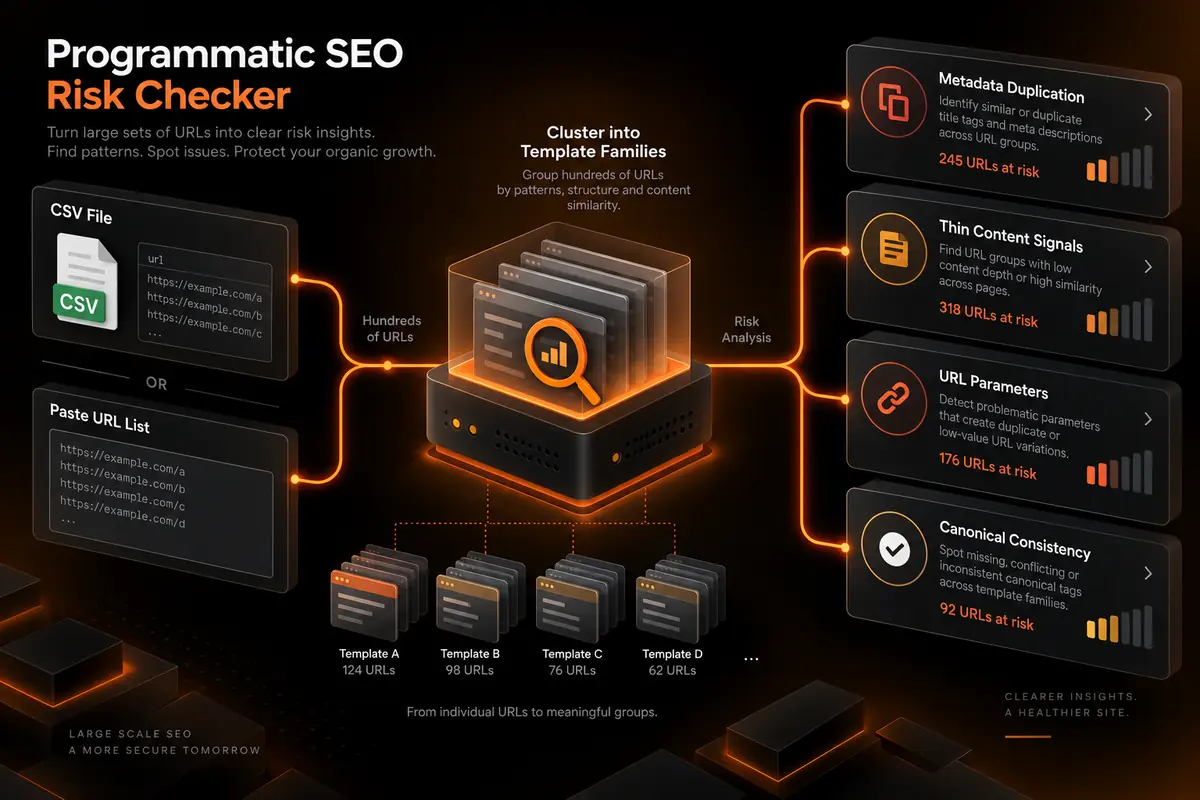
CSV file and pasted URL list grouped into template families with metadata, thin-content, parameter, and canonical risk cards

Browser-Side Inventory Analysis

Analyze Up to 5,000 URLs

CSV or Pasted Data Input

Template-Level Grouping

Duplicate Metadata Rates

No Automatic Site Changes

CHECK BEFORE YOU SCALE

Find Template Risks Early

Review your URL inventory before launching more pages, changing a shared template, or making sitewide consolidation decisions.
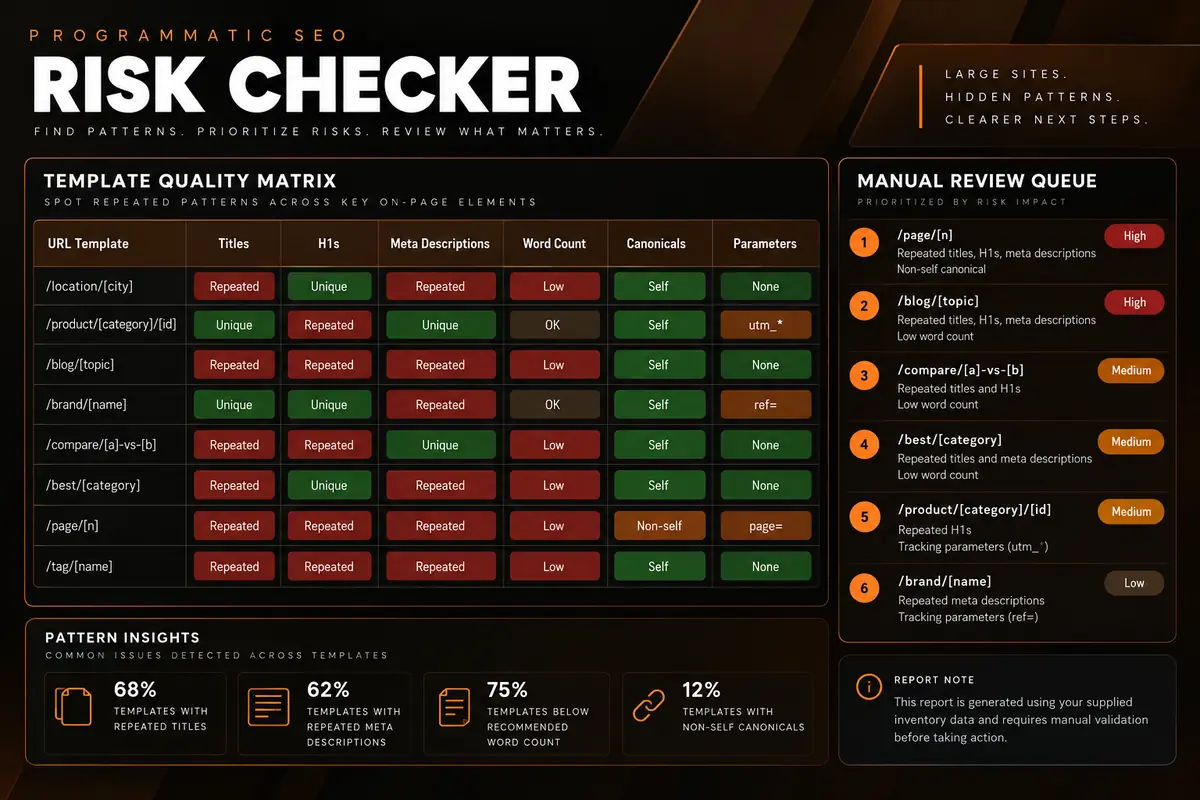
Programmatic SEO quality matrix comparing template titles, H1s, meta descriptions, word counts, canonicals, and parameters
USE CASES

Who Can Use This Tool?

Use the checker whenever repeated page templates make individual URL reviews slow, inconsistent, or difficult to prioritize.
Programmatic SEO Teams
Ecommerce Product and Category Sites
Marketplace and Directory Operators
Multi-Location Page Networks
Publishers With Large Archives
SEO Agencies Reviewing Client Inventories
Developers Maintaining Page Templates
LOCAL INVENTORY REVIEW

Check Your CSV Before You Upload It

The tools dashboard identifies this module as browser-side CSV and URL analysis, and the interface states that uploaded files are not saved in the WordPress database.

Use only the columns required for the audit. Remove passwords, customer details, unpublished business data, access tokens, or other confidential information before uploading or pasting an inventory.
FREE TOOLS

Other Free Tools From WebTrendSEO

Keyword Cannibalization Checker

Find pages competing for identical queries using Search Console.

Internal Link & Orphan Page Checker

Review internal link inventories to identify orphan page candidates.

Sitemap Health Checker

Review XML sitemaps for errors and duplicate URLs.

Content Pruning Recommendation Tool

Review underperforming pages for content updates or page consolidation.

Competitor Page Gap Analyzer

Compare public pages to identify gaps in content coverage.

Content Brief Topical Gap Generator

Plan a content brief and review topical gaps.

Safer programmatic growth starts with consistent templates, useful content, and evidence-based review. Built by WebTrendSEO.

FAQS

Programmatic SEO Risk Checker FAQs

Learn what inventory data the checker uses, which repeated risks it can surface, and where manual review is still essential.
A Programmatic SEO Risk Checker reviews a supplied URL inventory for repeated patterns that may create sitewide quality or technical problems. It helps identify template groups with duplicate metadata, thin-page signals, parameter sprawl, canonical concerns, or elevated risk scores.
Upload a CSV or paste URLs or CSV rows. The most useful columns include URL, Title, H1, Meta Description, Word Count, and Canonical. The checker analyzes those values in the browser and infers URL templates from repeated path patterns. It does not crawl the website.
The report can highlight repeated titles, H1s, and meta descriptions; pages below your selected word-count threshold; parameter-heavy URL groups; canonical inconsistencies; and template groups with a higher concentration of supplied risk signals.
Yes. You can use it without mandatory signup or a paid data provider. Choose an inventory limit of 500, 2,000, or 5,000 rows. The accuracy of the report depends on the completeness and consistency of the data you provide.
It does not crawl pages, measure rankings, confirm indexation, evaluate search intent, or determine whether a short page is genuinely low quality. Missing or inconsistent CSV fields can weaken the analysis. Validate representative live pages before making template-level decisions.
No. It does not edit templates, change canonicals, add noindex directives, redirect URLs, merge pages, or delete content. Use the report as a prioritization aid, then investigate each pattern and test any changes safely.
LET’S TALK

Turn Template Risks Into a Scalable SEO Plan

Inventory analysis helps you see repeated patterns. WebTrendSEO can help validate the findings, inspect representative pages, improve shared templates, and build a technical SEO process that supports useful pages at scale.